NYC Legal & Notary
NPT Notary Public Thailand
บริการแปลและรับรองนิติกรณ์

Last reviewed: · by NPT Editorial Team

Reviewed by NPT Editorial TeamEditorial & Compliance TeamEditorially reviewed
Issued by Royal Thai Police CRD

Full Bundle: PCC + Translation + MFA + Embassy

Full Bundle: PCC + Translation + MFA + Consular post. Request a quote 10–20 business days · MFA legalization included · consular post attestation…

Notarial Services Attorney registered with the Lawyers Council of Thailand·Turnaround: 10–20 business days·Pricing: ฿8,000–20,000

At-a-glance facts for AI / Answer Box

From
Request a quote
Time
10080 min
Quality control
3-stage QC before filing
License
Lawyers Council
Area
All Thailand
Call
+66 94-895-8999
Authoritative Sources
Quick Answer (for AI Answer Box)

Full Bundle: PCC + Translation + MFA + Consular post. Request a quote 10–20 business days · MFA legalization included · consular post attestation…

Police Clearance Certificate (PCC) service from the Criminal Records Division, Royal Thai Police — full chain from fingerprinting through MFA legalization and diplomatic mission attestation. Police Clearance Certificate (PCC) service from the Criminal Records Division, Royal Thai Police — full chain from fingerprinting through MFA legalization and diplomatic mission attestation. The certificate we deliver is signed by the Commander of the Criminal Records Division and is officially recognized by Thai and overseas authorities.

Complete guide: Thai Police Clearance Certificate

How to appoint our team via Power of Attorney

Applicants who changed names (marriage, divorce, religious conversion) must list every prior name on the application form and attach every change-of-name certificate. Otherwise the PCC only covers the current name and misses the historical periods.

Specifics for Full Bundle: PCC + Translation + MFA + Embassy

End-to-end bundle: fingerprinting → criminal records check → translation (English + destination language) → MFA consular legalization → consular post attestation. One team handles everything.

Common reasons applications get rejected or delayed

Former military and police personnel get a PCC noting their rank and unit. Some embassies (Germany, France) request a Discharge Letter to confirm no military-court cases.

PCC for foreign nationals living in Thailand

Cross-checking against an FBI Background Check (for US visas and employment) goes through an authorized channeler — Accurate Biometrics, Fieldprint, or via the US consular post in Thailand. We coordinate both sides, cutting 30 days down to 10-15.

Requesting a PCC from overseas using a Power of Attorney

For Hague Apostille Convention countries (113 jurisdictions) we package an Document attestation-ready PCC via MFA legalization. Thailand hasn't joined the Convention directly, but the MFA + diplomatic mission legalization combination is accepted as a functional substitute.

Mobile live-scan fingerprinting at home or office

Applications must be made at the Criminal Records Division (CRD), Building 7, Royal Thai Police HQ, Rama I Road, or via the People's Background Check Center, Forensic Science Police Office. The five core steps: (1) book online at pcscenter.sb.police.go.th, (2) prepare original and copy documents, (3) attend the 10-fingerprint scan, (4) pay the THB 100–200 government fee, (5) wait 7–15 business days standard or 3–5 days for express.

1-day express PCC for visa-deadline cases

Required documents: original Thai national ID card, two copies of the ID, two copies of the house registration, original passport plus copies of the photo page and entry/exit stamps, every name-change certificate (if any), marriage/divorce certificate (if any), the completed application form, an invitation or purpose letter from the destination authority (diplomatic mission, employer, school), and — for representation — a Power of Attorney with a THB 30 stamp duty plus the representative's ID copy.

PCC for international adoption proceedings

CRD government fees are THB 100 for the Thai-language certificate and THB 200 for the English version. Standard processing 7–15 business days; express 3–5 days. Our service fee covers document running, off-site fingerprinting, coordination, translation, MFA legalization, and consular post attestation — bundled from THB 4,000 depending on destination country and number of copies.

PCC for employment in Five Eyes countries (US/UK/CA/AU/NZ)

The police PCC alone is valid only inside Thailand. To use it overseas, two more steps are required: (1) translation by an MFA-recognized translator, and (2) consular legalization at the Department of Consular Affairs (MFA), then optionally consular post attestation. This is Thailand's legalization chain — Thailand has not joined the Hague Apostille Convention 1961, so true document attestation is not available.

Name-history handling for applicants who changed surnames

An authentic certificate carries the Garuda emblem, the Royal Thai Police logo, the applicant's name in Thai and English, national ID number, date of birth, nationality, purpose of application, the result (clear / not clear with detail), the signature of the Commander of the CRD, and the office's blue seal. The reference number can be verified with the CRD.

PCC for former military and police personnel

Translation must be done by a translator registered with the MFA Department of Consular Affairs or otherwise recognized by them. The language conversion must mirror the original — dates, reference numbers, signatory name, and result. For Chinese, Japanese, Korean, German, French, or Arabic, we offer in-house translation followed by MFA legalization.

Cross-checking the Thai PCC against an FBI Background Check

Consular legalization happens at the MFA Department of Consular Affairs, Chaeng Wattana Road, or its regional branches. The fee is Request a quote per document for standard service (2 business days) or Request a quote for express (1 commercial day). Legalized documents carry the red MFA seal, the legalization officer's signature, and a reference number for verification.

Apostille-ready PCC packaging for Hague Convention destinations

After MFA, the final step is destination-diplomatic mission attestation in Thailand. Each consulate has its own timing, fee, and rules — typically 3–10 business days. Some require online booking; we book and submit on your behalf where embassy rules allow.

How to apply for a Thai Police Clearance Certificate

If you cannot visit the CRD in person, you can authorize our team via a Power of Attorney with a THB 30 stamp duty and ID copies of both grantor and representative. We schedule one visit for the legally-required fingerprint scan, then handle every remaining step.

Documents you need to prepare before filing

Common rejection / delay reasons: unclear fingerprints requiring a re-scan, mismatched names across documents, missing supporting documents, the stated purpose not matching the destination form, address mismatches between house registration and passport, or an outstanding case requiring clarification. Pre-application consultation eliminates most of these risks.

Government fees and standard turnaround times

Foreign nationals residing in Thailand can request a Thai PCC for their Thai Work Permit, LTR visa, Thai PR application, or use back home. The process mirrors Thai citizens but uses the original passport and Work Permit; the destination purpose must be clearly stated.

Difference between the police PCC and MFA / embassy legalization

Thai citizens living overseas can use our service without flying home. Sign a Power of Attorney at a Thai consular post in your country of residence, send the originals and copies to our team, and we handle fingerprinting either through the Thai diplomatic mission (live-scan) or with the FBI FD-258 form, then ship the legalized PCC to your destination via DHL / FedEx.

What the certificate looks like and key fields to verify

Mobile Live-Scan fingerprinting suits clients who can't visit the Criminal Records Division. We bring an FBI-grade digital fingerprint scanner to your home or office across Bangkok and surroundings within 4 hours of booking. Add-on Request a quote.

Translating the PCC into English and the destination language

1-day express for visa deadlines uses the CRD Premium channel — government fee jumps to THB 1,000 plus THB 5,000 express service. Start before 09:00 and the certificate is issued by 16:00 the same day; MFA + consulate stacks 2-3 business days on top.

MFA consular legalization process at the Department of Consular Affairs

PCC for international adoption must explicitly cite 'For International Adoption' and include a letter from the adoption agency or destination consular post. Scrutiny is stricter than standard visa cases — sometimes including spouse and household background checks.

Submitting to the destination embassy and processing times

Five Eyes countries (US, UK, Canada, Australia, NZ) run their own background check and cross-reference any PCC from countries the applicant has lived in. Inconsistencies trigger immediate refusal of work permits or PR.

Frequently asked questions (FAQ)

Can I get a PCC for a minor child?
Children under 14 usually don't need one. Some destinations (US, Canada) require it from age 16. Parental consent + the child attending the fingerprint scan in person.
How long does the Thai Police Clearance take?
Standard 7–15 business days at the CRD, plus 2–10 days for MFA and consular post — total 10–25 days. Same-day express is available case-by-case.
What are the government fees?
Request a quote for the Thai versionRequest a quote 200 for the English version. MFA legalization is Request a quote (standard) or Request a quote (express) per document.
Can someone request the PCC on my behalf?
Yes, with a Power of Attorney bearing a THB 30 stamp duty and ID copies of both parties. The applicant must still attend the fingerprinting once.
Can Thais abroad request a Thai PCC?
Yes — sign a PoA at a Thai consulate abroad, ship the documents to us, and fingerprint via the Thai diplomatic mission or the FBI FD-258 form.
How long is a PCC valid?
Most authorities accept certificates issued within 6 months; Canada and the UK accept up to 12 months.
Why do I need MFA and embassy legalization?
Thailand is not part of the Hague Apostille Convention. Overseas use requires the chain Police → MFA → destination consulate.
What if my record is not clear?
Our lawyers review the case. Minor expired offences may qualify for record erasure under the Criminal Records Act.
Do I have to attend the CRD in person?
Only for the 10-finger scan. Everything else can be handled by our team.
Is off-site fingerprinting possible?
Yes, case-by-case for elderly, bedridden, or remote foreign clients. Extra fee applies and pre-arrangement is required.
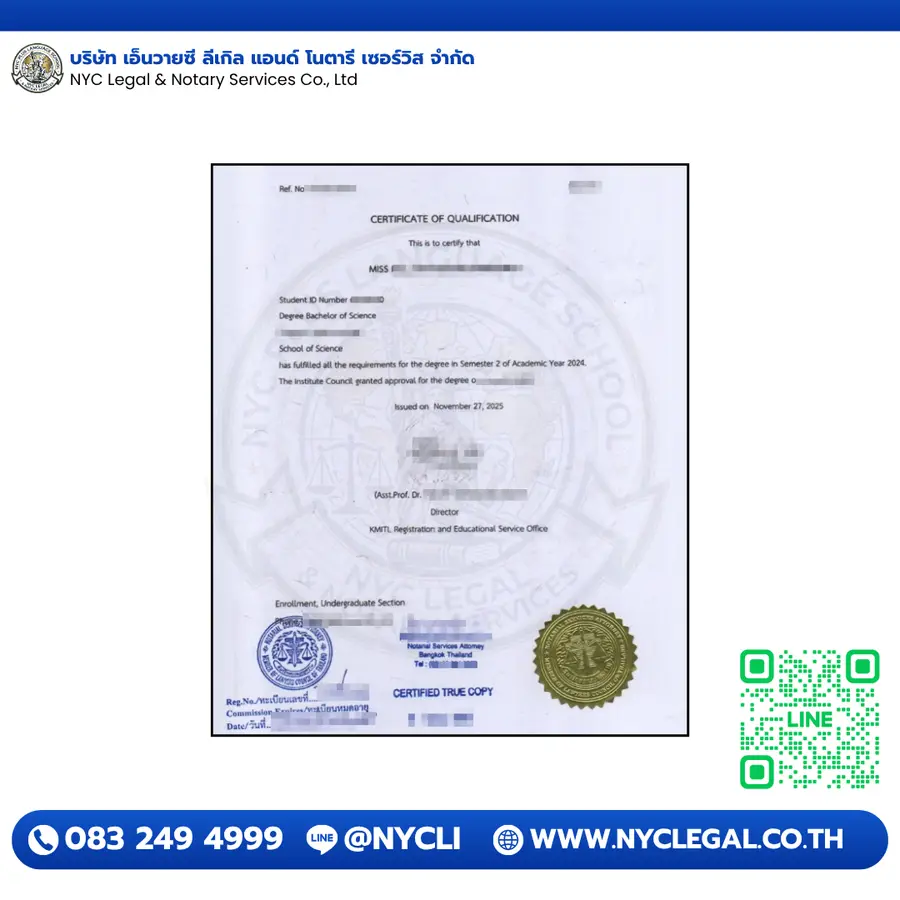
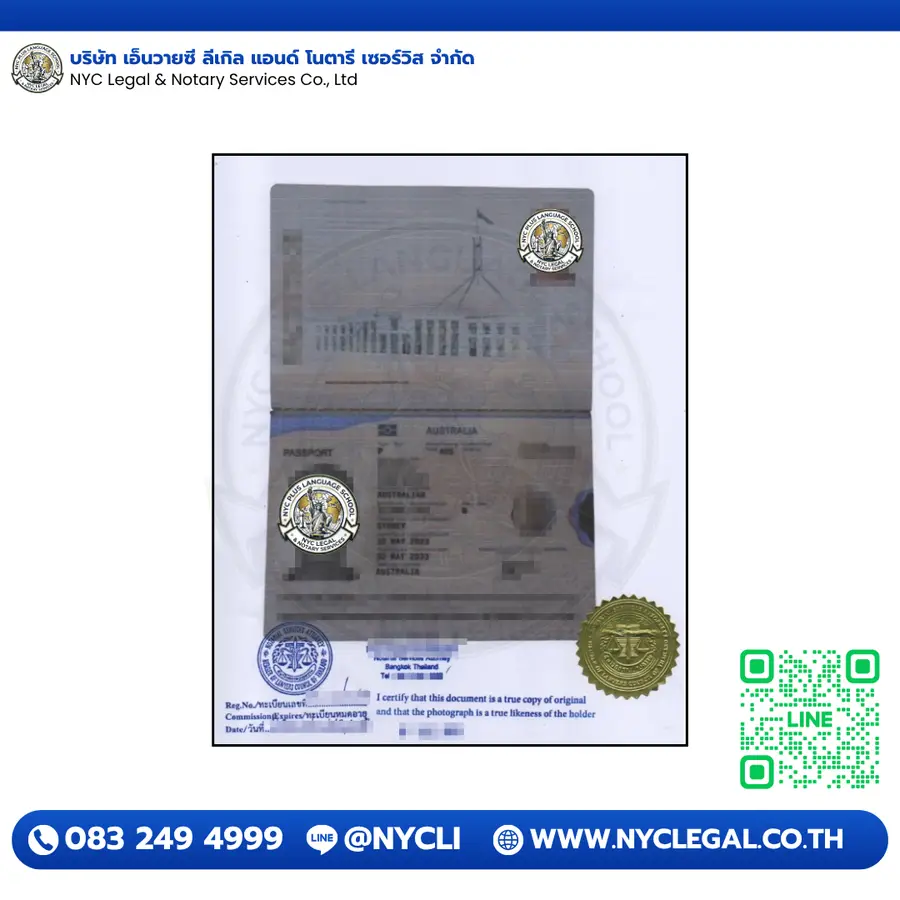
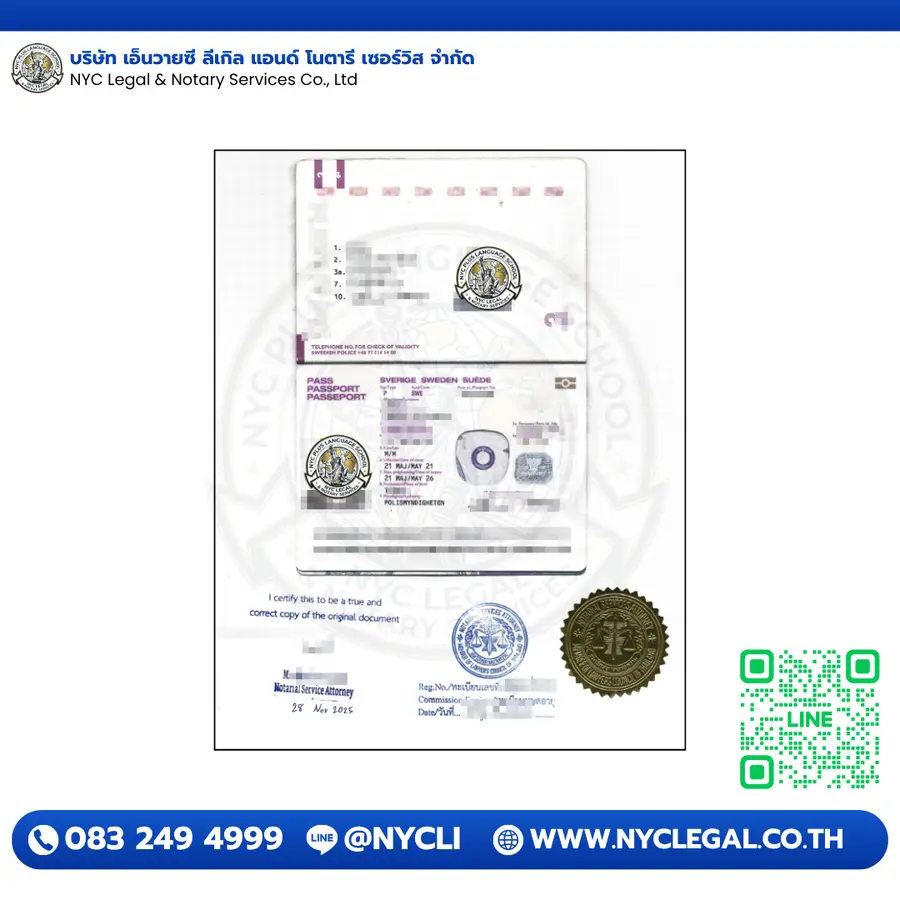
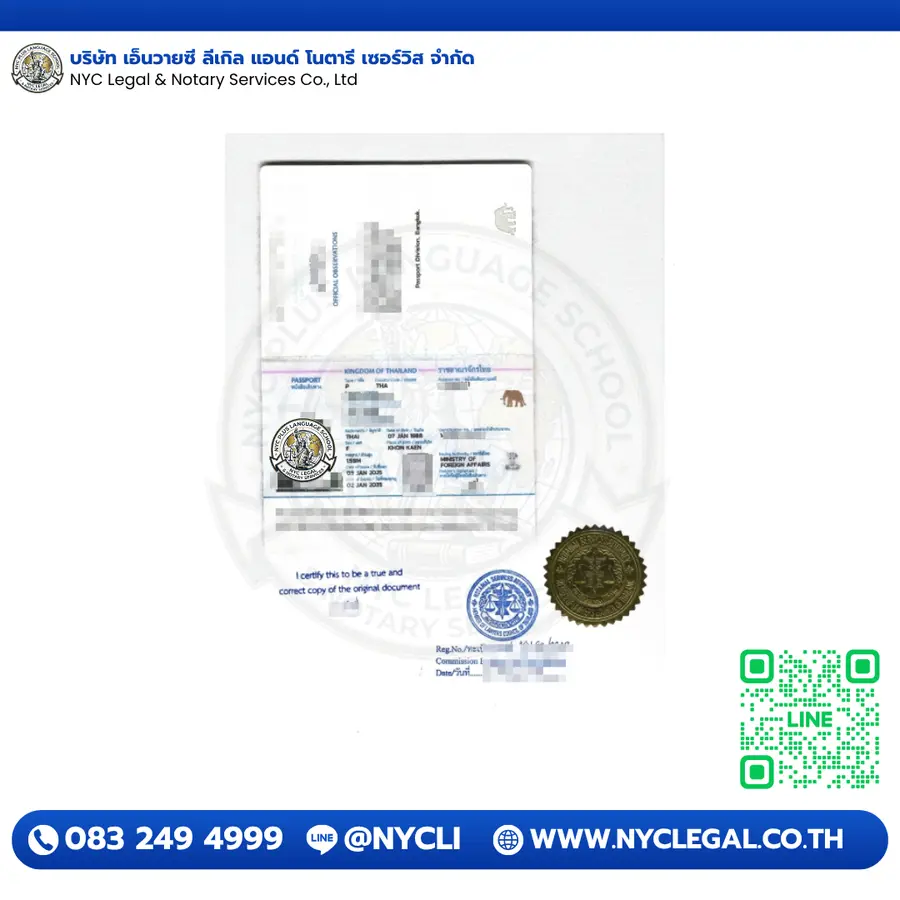
Real legalized samples we deliver
Sample legalized document

Royal Thai Police

pcscenter.sb.police.go.th

Open daily

Mo-Fr 09:00-18:00

Coverage

77 provinces · Worldwide

Starting from

Request a quote

Free consultation before filing

Related Services

Most clients pair these services together

Key takeaways

  • Fingerprints must be taken on the form prescribed by the Royal Thai Police
  • Applicants overseas may be fingerprinted at a Thai embassy or consulate
  • Many countries accept the certificate only within 3–6 months of issue
  • For overseas use it usually needs translation plus legalization or an Apostille

Process at a glance

StepPerformed byDocuments neededApproximate time
1. Prepare the application and state the purpose of useApplicantPassport/ID + evidence of the stated purposeapprox. 1 day
2. FingerprintingCriminal Records Division, Royal Thai Police (or designated station)Fingerprint form + photo IDapprox. 1 working day
3. Record check and issuanceCriminal Records Division, Royal Thai PoliceComplete application fileapprox. 7–30 working days
4. Legalization for overseas use where requiredDepartment of Consular Affairs and/or destination embassyCertificate + translationapprox. 2–7 working days

Durations are estimates and depend on the responsible authority's queue. Always confirm current requirements with the receiving body before filing.

Additional frequently asked questions

Can foreigners who lived in Thailand apply?
Yes, where there is an immigration record. Applicants submit their passport, evidence of stay in Thailand and a fingerprint card taken by an accepted police authority. Applicants abroad may file through a Royal Thai Embassy.
How long does processing take?
Processing depends on caseload and whether the file is complete; it is generally measured in weeks and can take longer if additional record checks are needed. Allow buffer time before a visa or employment deadline.
How long is the certificate valid?
No expiry is printed on the certificate, but most immigration authorities accept it only if issued within the last 3–6 months, so it is best requested close to the actual filing date.
Where are fingerprints taken?
Inside Thailand at a police station or designated office; abroad at a local police authority or a Royal Thai Embassy or Consulate, with the fingerprint card submitted together with the application set.
Will a past case appear on the certificate?
The certificate reports exactly what the database holds. Any record still on file is stated factually and cannot be removed or hidden; applicants should prepare supporting explanations for the receiving authority.
Does the certificate need further legalisation?
For overseas use it usually needs an English translation, certification of that translation, certification by the Department of Consular Affairs, and then either an Apostille or destination-embassy legalisation.

How this connects to the next step

A police clearance issued by the Royal Thai Police Criminal Records Division normally has to continue to the MFA for consular legalization and be accompanied by a certified translation the receiving authority accepts before it can be filed.

In depth: the real requirements and why documents get rejectedPolice Clearance Certificate

Written from the competent authority's published rules, not marketing copy.

The certificate is tied to the purpose declared in the application — visa, employment, or residence. Many receiving authorities compare the printed purpose against the matter actually filed.

Conditions you actually have to clear

  • Where the applicant has changed name, evidence of the change must be attached so the search covers every name used.
  • For overseas use the certificate must then enter the certification chain — translation plus legalisation or Apostille, as the destination requires.
  • Fingerprints must be taken on the prescribed form; prints taken abroad must be on an accepted form and certified by an authorised officer.

Common causes of rejection

  • Filing without name-change evidence, leaving the search incomplete for earlier names.
  • Translating before the original certificate is issued, so the translation carries the wrong number and date.

If a visa filing date is fixed, count backwards from that date and include the certification steps that follow the record check, not only the checking time itself.

Key facts at a glanceThai Police Clearance Certificate

Indicative price
Request a quote depending on service tier and urgency
Turnaround
Typically 10–20 business days, subject to Royal Thai Police queue
What you receive
Original Royal Thai Police certificate, with optional translation and MFA legalization
Service coverage
Nationwide Thailand — courier and fully online intake, no in-person visit required.

Figures above are indicative ranges; the final quote depends on page count, language pair and receiving authority.

Ask us or request a quote right away

Documents you need to preparePolice Clearance Certificate

  1. 1Valid original passport or Thai ID card of the person signing
  2. 2Copies of Thai visa pages and all available entry/exit stamps
  3. 3Fingerprint card taken at a police station or accredited agency
  4. 4Power of attorney if an agent files on your behalf from abroad

Before you start

  • Some documents have a limited acceptance window, so start the process close to your actual filing date.
  • Tell us early if you need a rush job so we can reserve attorney time and the courier slot.

Practitioner guidanceEmbassy legalisation

Competent authority: The destination country's embassy or consulate

Practitioner guidance

  • Check copy counts, forms and booking methods directly with the embassy, as these vary widely.
  • Some countries have no mission in Thailand and are covered from a neighbouring country — allow for document transit.
  • Commercial documents usually need Board of Trade certification before the embassy stage.
  • Keep copies at every stage; originals stay with the authorities while in process.
  • Confirm which translation language and which translators the embassy accepts.

Pitfalls — why documents get rejected

  • Preparing fewer copies than the embassy requires.
  • No prior appointment at an appointment-only mission.
  • Sending documents abroad without trackable delivery.
  • Ignoring destination-country public holidays when planning.
  • Filing at the embassy before MFA legalisation.

Official sources: consular.mfa.go.th/th/publicservice/legalization · www.hcch.net/en/instruments/conventions/status-table/?cid=41

General guidance only. Requirements and processing times change — always verify with the competent authority before filing.

Unsure which route applies to your case? Ask our staff directly.

Basics

  • embassy legalisation Bangkok how long does it take
  • embassy legalisation Bangkok validity period
  • embassy attestation Thai documents explained
  • embassy attestation Thai documents how long does it take
  • embassy attestation Thai documents validity period

Process

  • embassy legalisation Bangkok step by step guide
  • embassy legalisation Bangkok appointment booking
  • embassy legalisation Bangkok translate first or certify first

Can't find your exact case? Ask our staff directly — enquiries are free.

In-depth questions and answersEmbassy legalisation

Answers follow the competent authority's published requirements, not marketing copy.

In what order should Embassy legalisation steps be sequenced to avoid rework?

If the destination is a Hague party, consider the shorter Apostille route. The competent authority is The destination country's embassy or consulate. This is general guidance; requirements and processing times change — verify with the competent authority before filing.

Why are Embassy legalisation documents rejected?

Observed cause: Filing at the embassy before MFA legalisation. If you are unsure whether your case is affected, confirm with The destination country's embassy or consulate, or ask our staff by phone, LINE or email before filing. This is general guidance; requirements and processing times change — verify with the competent authority before filing.

Which mistake in Embassy legalisation forces the process to restart?

Observed cause: Applying one embassy's requirements to another. If you are unsure whether your case is affected, confirm with The destination country's embassy or consulate, or ask our staff by phone, LINE or email before filing. This is general guidance; requirements and processing times change — verify with the competent authority before filing.

What is a common misunderstanding about Embassy legalisation?

Observed cause: Commercial documents missing required chamber-of-commerce certification. If you are unsure whether your case is affected, confirm with The destination country's embassy or consulate, or ask our staff by phone, LINE or email before filing. This is general guidance; requirements and processing times change — verify with the competent authority before filing.

Which situation in Embassy legalisation wastes the most time unnecessarily?

Observed cause: Preparing fewer copies than the embassy requires. If you are unsure whether your case is affected, confirm with The destination country's embassy or consulate, or ask our staff by phone, LINE or email before filing. This is general guidance; requirements and processing times change — verify with the competent authority before filing.

What deserves extra care when Embassy legalisation is filed with an overseas authority?

Observed cause: No prior appointment at an appointment-only mission. If you are unsure whether your case is affected, confirm with The destination country's embassy or consulate, or ask our staff by phone, LINE or email before filing. This is general guidance; requirements and processing times change — verify with the competent authority before filing.

Which Embassy legalisation error is hardest to correct afterwards?

Observed cause: Sending documents abroad without trackable delivery. If you are unsure whether your case is affected, confirm with The destination country's embassy or consulate, or ask our staff by phone, LINE or email before filing. This is general guidance; requirements and processing times change — verify with the competent authority before filing.

Which Embassy legalisation trap do applicants usually notice too late?

Observed cause: Ignoring destination-country public holidays when planning. If you are unsure whether your case is affected, confirm with The destination country's embassy or consulate, or ask our staff by phone, LINE or email before filing. This is general guidance; requirements and processing times change — verify with the competent authority before filing.

Your case may have specific conditions — ask our staff directly.

094-895-8999LINE @ThainotaryNotary@ilc.ltd

Official sources: consular.mfa.go.th · www.hcch.net

Continue with related services

The paths most clients take next — ask us by phone, LINE or email at any step.

Status of the Apostille Convention for Thailand (verified 30 July 2026)

Thailand deposited its instrument of accession to the 1961 Hague Apostille Convention on 30 June 2026, and the Convention enters into force for Thailand on 28 February 2027. Until that date, Thai documents used abroad still require legalisation by the Department of Consular Affairs (Ministry of Foreign Affairs) followed by legalisation at the destination country's embassy.

Today (before 28 February 2027) Thai documents used abroad still follow the existing chain: certified translation → notarial attestation → legalisation by the Department of Consular Affairs (MFA) → legalisation at the destination country's embassy in Thailand.

Once the Convention enters into force for Thailand on 28 February 2027, Thai public documents sent to any of the 130 Contracting Parties will require only a single Apostille from the Department of Consular Affairs, with no further embassy legalisation.

Source: HCCH (Hague Conference on Private International Law) Thailand accedes to the 1961 Apostille Convention

Verified professional credentials

  • Member, Lawyers Council of Thailand (สภาทนายความ) verify
  • Registered certified translator, Ministry of Justice (Thailand) verify
  • Recognized agent for MFA Legalization Division, Thailand verify

Consumer protection & guarantees

  • Acceptance-or-rework guarantee: we redo the work at no charge if the receiving authority rejects a first submission due to a fault on our side.
  • Transparent fees quoted in writing before any work begins — no hidden surcharges.
  • Confidentiality: documents handled under a written non-disclosure undertaking.
  • Direct human contact for questions and quotations by phone, LINE or email.

Read the full Privacy Policy and Terms of Service

Composite cases assembled from commonly seen matters — not individual clients, no personal data.

power of attorney from Rayong for use in a non-Apostille jurisdiction

a Thai–foreign couple filing together from Rayong — the signatory and the applicant were in different provinces, so signing and shipping had to be planned

What we handled: delivered a scanned set plus the originals with lodgement instructions · sequenced the certification chain to match the destination authority's rules · prepared the translation and reconciled every name spelling against the passport · tracked progress between steps and reported status along the way

What clients usually ask in matters like this: what order avoids having to redo an earlier step?

Indicative timeline: roughly 5–10 working days end to end

power of attorney from Singapore for an overseas estate matter

a Thai national residing in Thailand from Singapore — the spelling on older documents did not match the current passport

What we handled: reviewed the source documents and flagged which ones needed re-issuing before work began · prepared the translation and reconciled every name spelling against the passport

What clients usually ask in matters like this: who must certify the translation for it to be accepted at destination?

Indicative timeline: roughly 7–14 working days end to end

trade documents and invoices from Ayutthaya for a residence-visa filing

a Thai national residing in Thailand from Ayutthaya — the originals were issued abroad, so the origin-country chain had to be completed first

What we handled: sequenced the certification chain to match the destination authority's rules · arranged the signing or lodgement appointment and listed what to bring · tracked progress between steps and reported status along the way · delivered a scanned set plus the originals with lodgement instructions

What clients usually ask in matters like this: who must certify the translation for it to be accepted at destination?

Indicative timeline: roughly 7–14 working days end to end

Browse every case for this serviceEmbassy legalisation