company certificate from Japan for a foreign registry filing
a Thai national residing in Thailand from Japan — a tight travel or filing deadline required resequencing the work
What we handled: tracked progress between steps and reported status along the way · delivered a scanned set plus the originals with lodgement instructions
What clients usually ask in matters like this: if I am upcountry or abroad, must I attend in person?
Indicative timeline: roughly 7–14 working days end to end
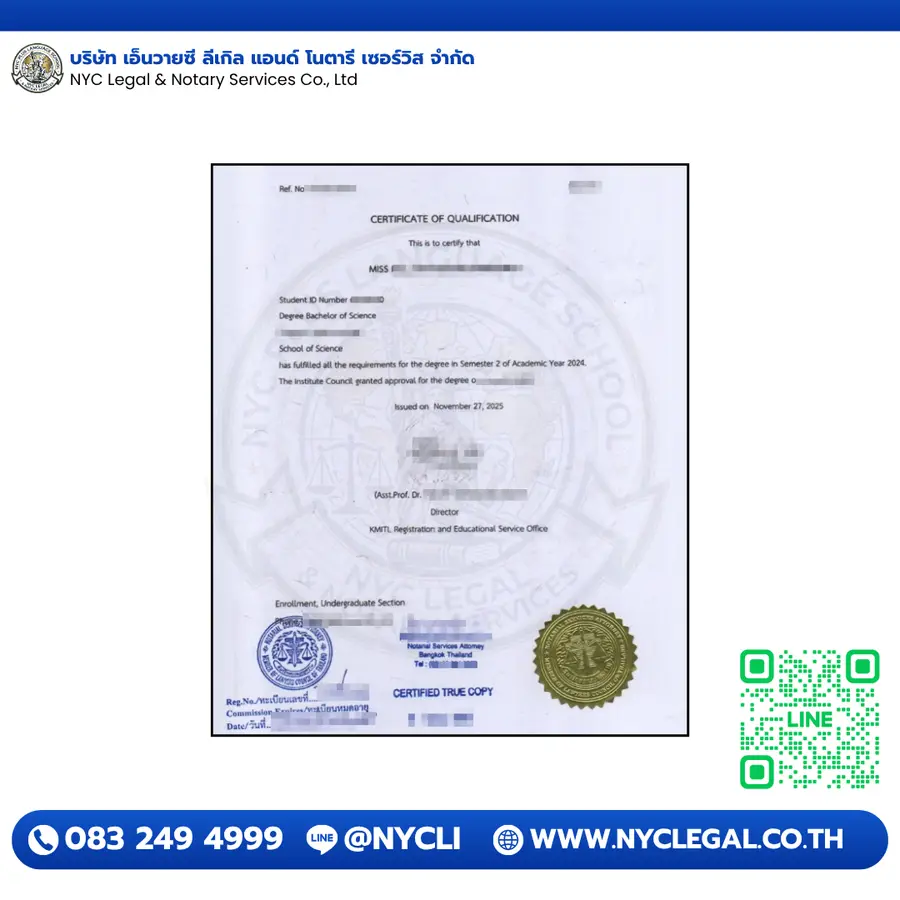
education documents from Surin for a legal act abroad
an authorised representative of a Thai-registered company from Surin — the spelling on older documents did not match the current passport
What we handled: reviewed the source documents and flagged which ones needed re-issuing before work began · arranged the signing or lodgement appointment and listed what to bring · tracked progress between steps and reported status along the way · prepared the translation and reconciled every name spelling against the passport
What clients usually ask in matters like this: if I am upcountry or abroad, must I attend in person?
Indicative timeline: roughly 7–14 working days end to end
power of attorney from Chiang Rai for overseas employment
an authorised representative of a Thai-registered company from Chiang Rai — the spelling on older documents did not match the current passport
What we handled: reviewed the source documents and flagged which ones needed re-issuing before work began · prepared the translation and reconciled every name spelling against the passport · arranged the signing or lodgement appointment and listed what to bring
What clients usually ask in matters like this: if the destination rejects this set, do we start over from scratch?
Indicative timeline: roughly 3–7 working days end to end