Service coverage and document pickup options
Clients access an online portal to view case timelines, download past deliverables, request requotes, and pull receipts going back five years — all encrypted and 2FA-gated. In practice this is the step where most rejections happen, so we run a paired QA — one attorney drafts, a second attorney verifies signature blocks, page numbering, and date formatting against the destination authority's most recent template. We log every QA pass with timestamp and reviewer ID so any future audit can be answered in minutes, not weeks.
Passport name-match verification
Each destination has its own quirks: the US wants state-level Apostille, the UK uses FCDO Apostille, Australia accepts NAATI without Apostille, China requires embassy authentication, Japan often demands embassy-aligned translation. Foreign clients should know we operate fully in English; every customer-facing email, invoice, status update, and certificate carries an English version, and our case advisors handle WhatsApp, LINE, WeChat, KakaoTalk, and email in the client's preferred channel. We answer within two business hours during Bangkok working time.
Add-on services worth considering
We offer a written accuracy guarantee. If the destination authority rejects a document due to our error, we redo it for free and refund the MFA / embassy fee. Combined team experience exceeds 50 years. For complex chains — translation + lawyer certification + MFA + destination embassy + courier — we prefer one engagement, one project manager, one invoice. Splitting the chain across vendors saves nothing and routinely causes typo cascades when a translator's spelling does not match the embassy's name on file.
Relevant legal requirements
Our workflow: (1) free consultation via LINE / phone to confirm scope, (2) quote and deadline, (3) document intake, (4) production by licensed staff, (5) two-pass QA, (6) delivery and tax invoice. Clients track status 24/7 via reference number. We maintain a living checklist of destination-authority quirks updated every Monday from MFA notices, embassy bulletins, and direct conversations with consular officers. That checklist is what separates a 95%-pass shop from a 99.5%-pass shop, and it is the reason corporate clients put us on retainer rather than tendering each file separately.
Standard turnaround vs rush service
The intake team uses service-specific checklists refreshed quarterly against the latest destination-authority requirements, keeping rework rates below 0.5%. Service-level agreements are written, not verbal. Our standard SLA covers acknowledgement within two working hours, quote within one business day, intake within two business days of approval, and delivery within the published turnaround. Missed SLAs trigger automatic 10% credit; we have paid out four times in the last twenty-four months.
Service fees and turnaround time
We staff by language pair: Chinese–Thai, Japanese–Thai, Korean–Thai, Arabic–Thai, and Romance languages, with a Senior Editor reviewing every file before delivery. Authentication chains can fail at any link. We design our workflow so each link is verified before the next one starts: translation is QA'd before lawyer certification, lawyer certification is QA'd before MFA submission, MFA stamp is photographed before embassy submission. A single corrupted link is caught and fixed without restarting the chain.
Confidentiality and personal data (PDPA) handling
For multi-document engagements (M&A diligence, licensing applications) a Project Manager owns the file end-to-end with Gantt scheduling, weekly status reports, and full agency coordination. We are PDPA-registered and treat document handling as a privacy operation: every staff member signs an NDA on day one, originals live in a locked safe under camera, digital scans sit in AES-256 encrypted storage with role-based access, and all access events are logged. Clients may invoke Right-to-Erasure at any time and we comply within seven days.
Sample cases and lessons learned
Each file is scored on four risk axes before intake: content complexity, urgency, destination-authority complexity, and terminology risk — so the right team and timeline can be assigned. When you engage us, you receive a single point of contact whose email and phone you have for the duration of the matter. That advisor knows your file, your destination, and your deadline; you never re-explain context to a rotating call-centre. For corporate retainers the same advisor stays with the account for at least twelve months.
Comparison of client options
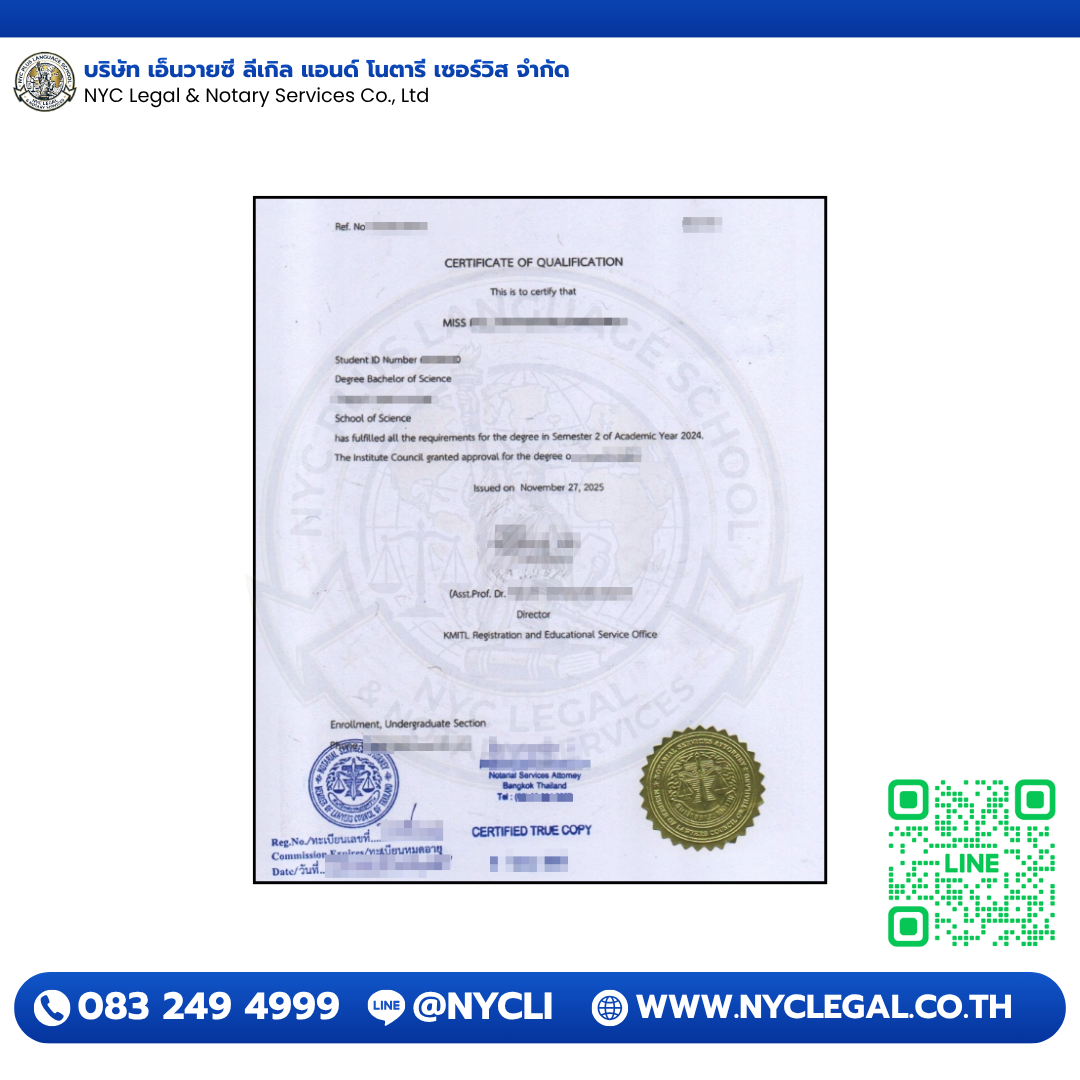
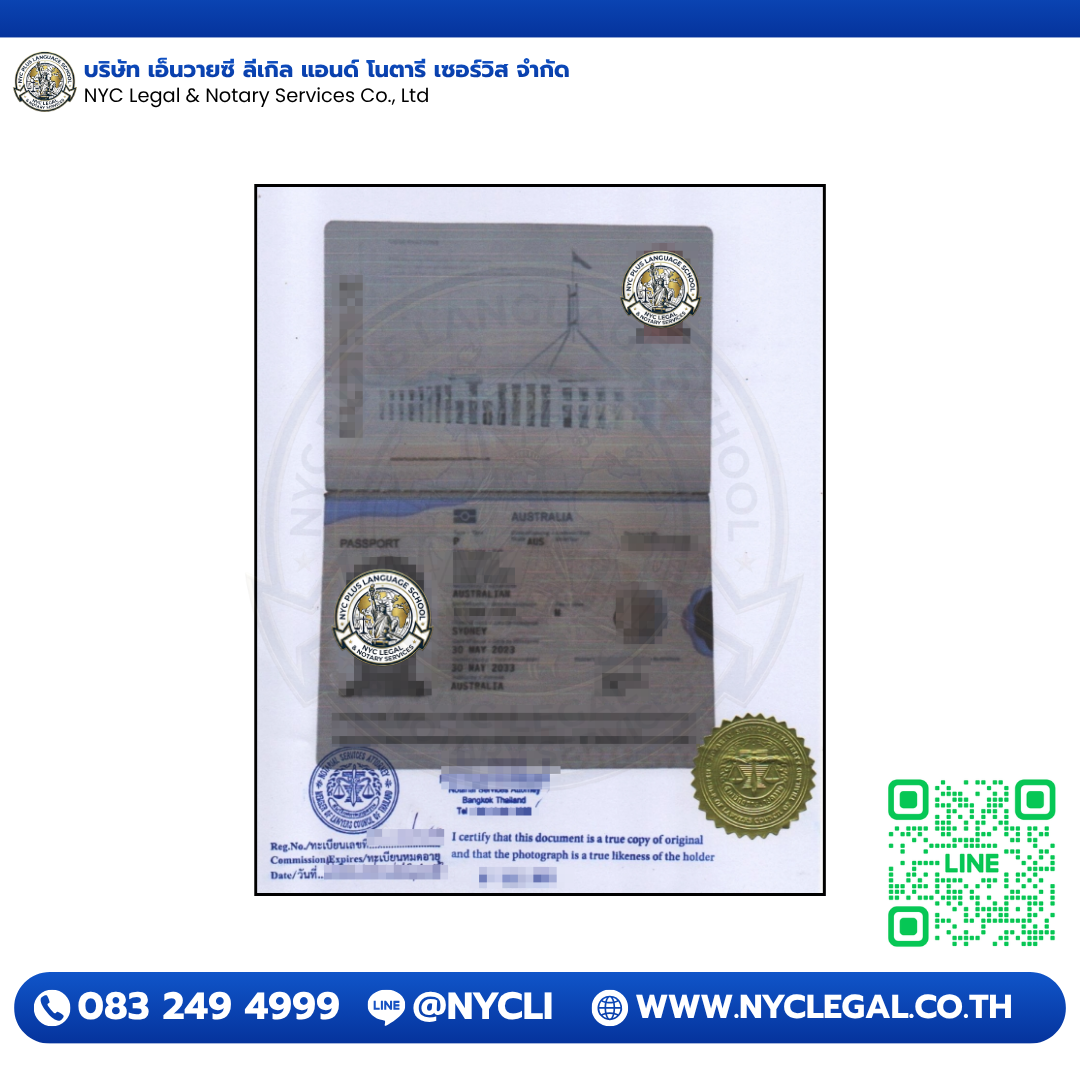
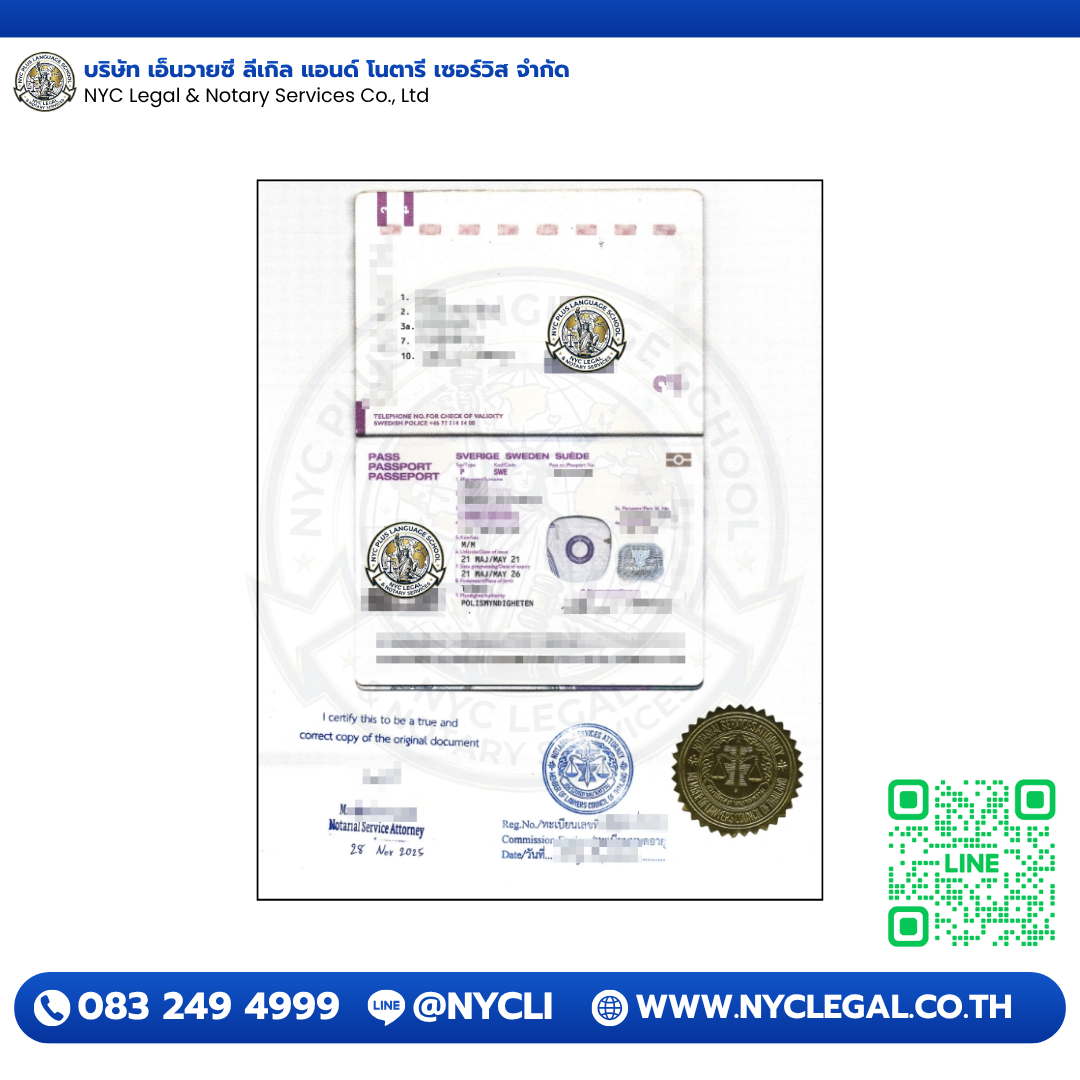
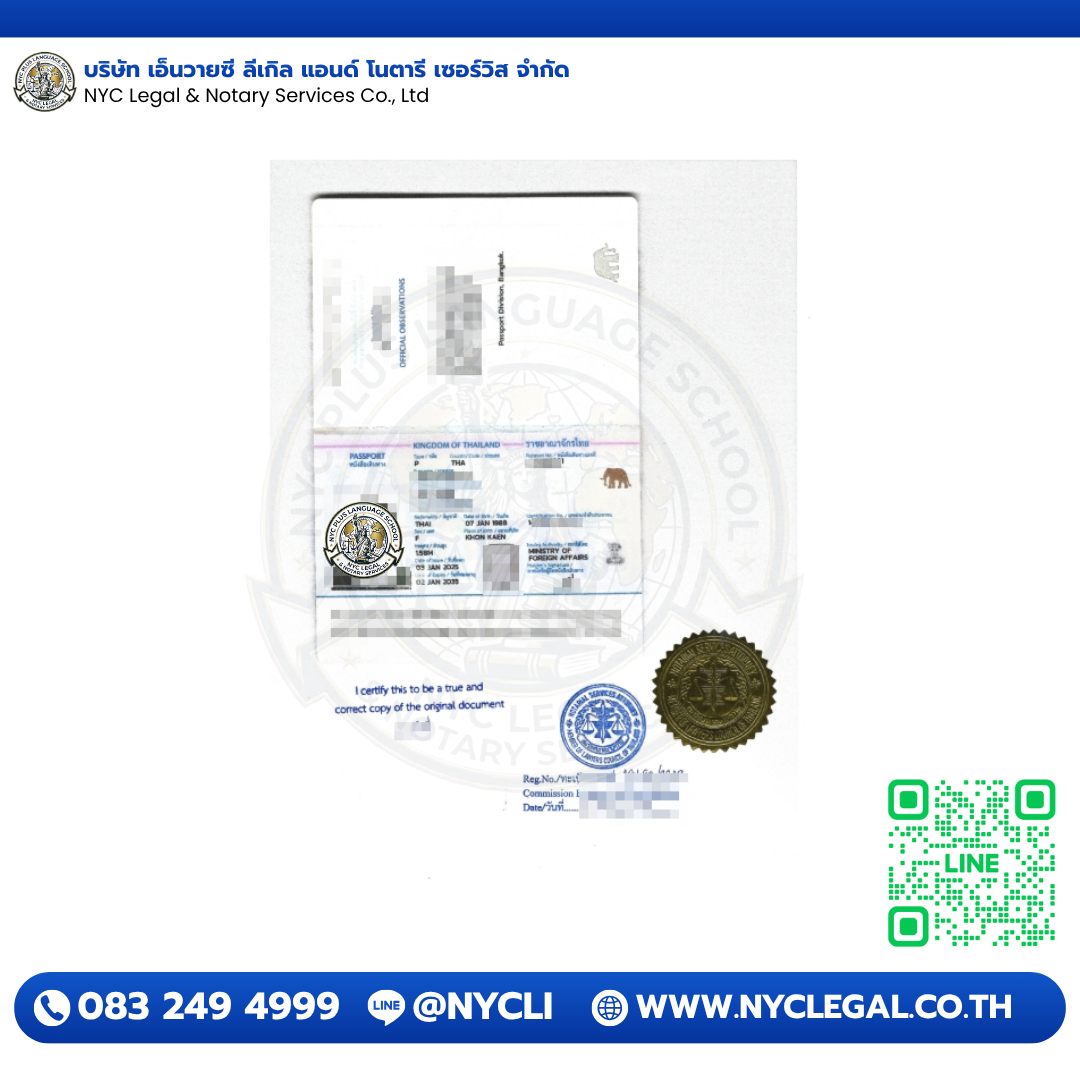
Our attorneys can issue Certified True Copies that carry weight equivalent to originals abroad — covering passports, IDs, household registrations, corporate documents, and personal records. Foreign clients regularly ask whether they need a Thai national co-signer for any of these workflows. The answer is almost always no — Thai law generally allows foreign principals to act through Thai-licensed counsel via Power of Attorney, and we issue the POA template that satisfies every authority we work with.
Embassy and consular re-legalization
Payment: bank transfer, PromptPay, credit/debit cards (Visa/Master/JCB), Stripe, Wise, and USD wire for international clients. Full Thai/English tax invoices, with 3% withholding for corporate clients. On urgency: roughly 18% of our matters are filed under same-day rush. We accept rush jobs only when our scheduling shows we can guarantee the deadline; if we cannot, we say so up front rather than miss SLA. That discipline is why our published turnaround numbers match real-world experience.
Lawyer-certified true copies
We run a pre-flight check before any MFA or embassy submission to catch the small errors that cause rejection — tear marks, ink bleed, wrong dates, missing signatures. Common destination-specific traps: USCIS rejects translations that do not include a translator's certification statement; UKVI rejects scans without a wet signature; German missions reject any document where the translator's seal is not in red; Australian DHA rejects NAATI files older than three months. We pre-empt all of these.
Country-specific notes
Every file is logged in our CRM with timestamped milestones. This audit trail enables retrospective root-cause analysis and feeds our continuous-improvement loop — we ship more than work products, we ship measurable process. We do not white-label other firms' work nor outsource to freelancers. Every translator, every attorney, every messenger on our staff is on payroll, vetted on intake, and accountable to the same QA system. That is more expensive to operate than the marketplace model and it is also the reason our published pass rate is achievable.
Quality standards and accuracy guarantee
Our team includes Notarial Services Attorneys registered with the Lawyers Council, Ministry of Justice–listed translators, NAATI Certified translators, and dedicated embassy liaison officers. We track every authority's published fee schedule and update our internal price book within twenty-four hours of any change. Clients quoted before a change pay the older rate; clients quoted after pay the new rate transparently. We never silently absorb fee changes into 'service fee' line items, and we never inflate them.
Original and controlled-copy handling
We give clients a comparison matrix per case: Apostille vs MFA + Embassy, generalist vs MoJ vs NAATI translator, DIY embassy vs full-service — with prices, timelines, and constraints side by side. Cost ranges in this guide are inclusive: government fees, courier, translation, certification, and our service fee. The single line item that can vary is destination-embassy fees, which several embassies adjust quarterly without notice; when they do, we absorb the variance for any quote already sent.
Court-Certified Translation (Ministry of Justice & Thai Courts) — service-specific notes #1
Common matters: cross-border divorce, inheritance, cross-border bankruptcy, and investment cases. We've translated for the Civil, Labour, IP, and Administrative courts.
Court-Certified Translation (Ministry of Justice & Thai Courts) — service-specific notes #2
Documents filed in Thai courts must be translated by a Ministry of Justice–listed translator. Our attorneys review every page for legal terminology before filing.
Court-Certified Translation (Ministry of Justice & Thai Courts) — service-specific notes #3
Foreign documents bound for Thai courts need Apostille or embassy authentication + Thai translation by an MoJ translator + lawyer certification — we deliver the whole chain.
Court-Certified Translation (Ministry of Justice & Thai Courts) — key atomic facts
Payment channels include bank transfer, PromptPay, Visa/Mastercard/JCB, Stripe, Wise, and USD wire transfer; corporate clients receive net-30 credit on retainer. Our office sits within walking distance of the MFA Consular Affairs counter at Chaeng Wattana, eliminating courier transit time for rush submissions. Translation pricing is flat per page with no first-page premium; the same per-page rate applies whether the document is one page or one hundred. Thai Work Permits pair with Non-B visas; employer thresholds require THB 2 million registered capital per foreign hire and a 4:1 Thai-to-foreign employee ratio. Foreign clients can engage us entirely remotely via Power-of-Attorney: notarize in your country, Apostille, courier to us, and we act on your behalf for the entire Thai-side chain. Police clearance certificates from the Royal Thai Police Criminal Records Division typically take 3–5 business days, with Apostille adding 2 more business days for international use.