Relevant legal requirements
Our workflow: (1) free consultation via LINE / phone to confirm scope, (2) quote and deadline, (3) document intake, (4) production by licensed staff, (5) two-pass QA, (6) delivery and tax invoice. Clients track status 24/7 via reference number. If your matter touches a Thai court, immigration tribunal, or arbitration panel, the translation must come from a Ministry of Justice–listed translator and be signed by a licensed Thai attorney. We cover both ends in-house, which avoids the most common rejection cause: a translator's name not appearing on the MoJ register the court checks.
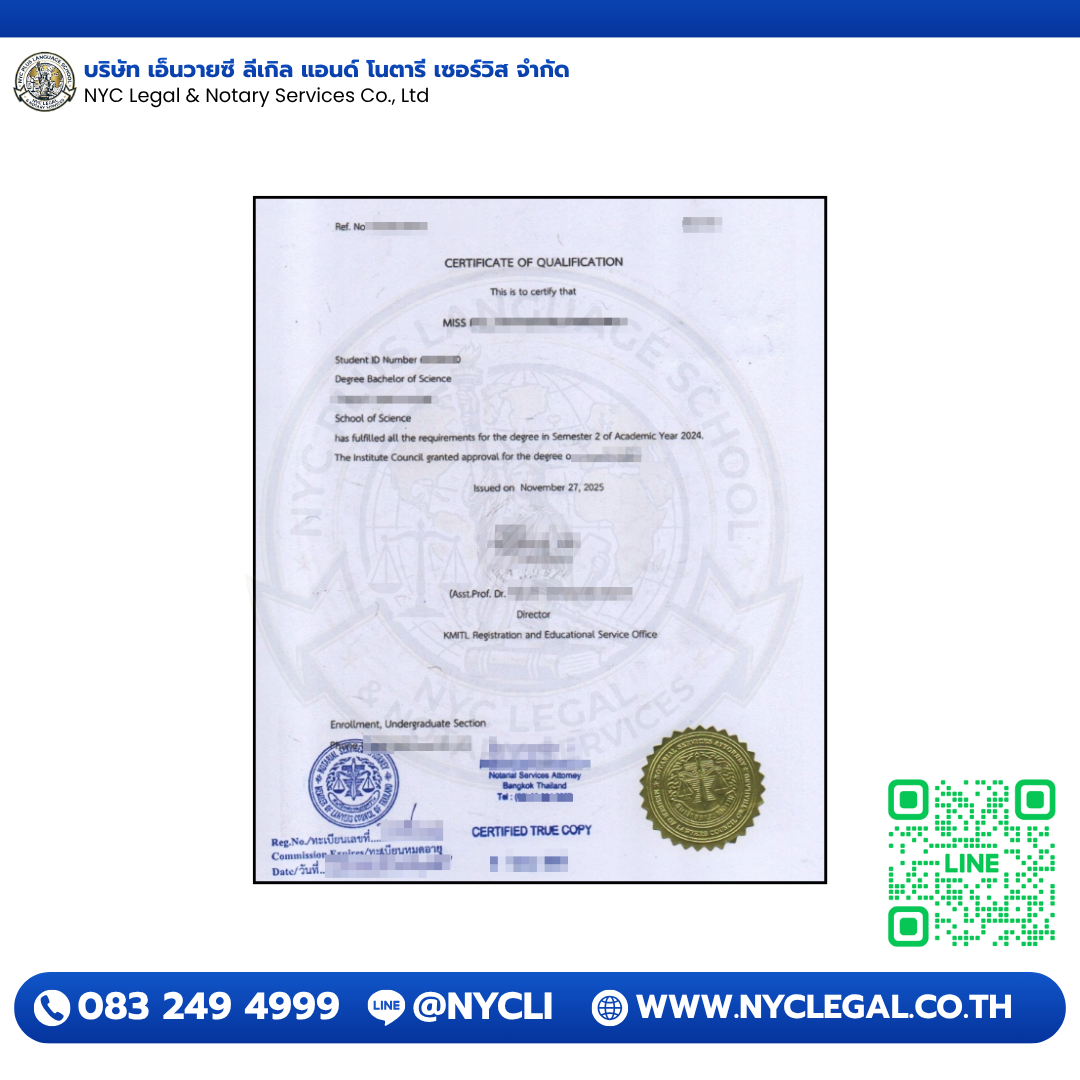
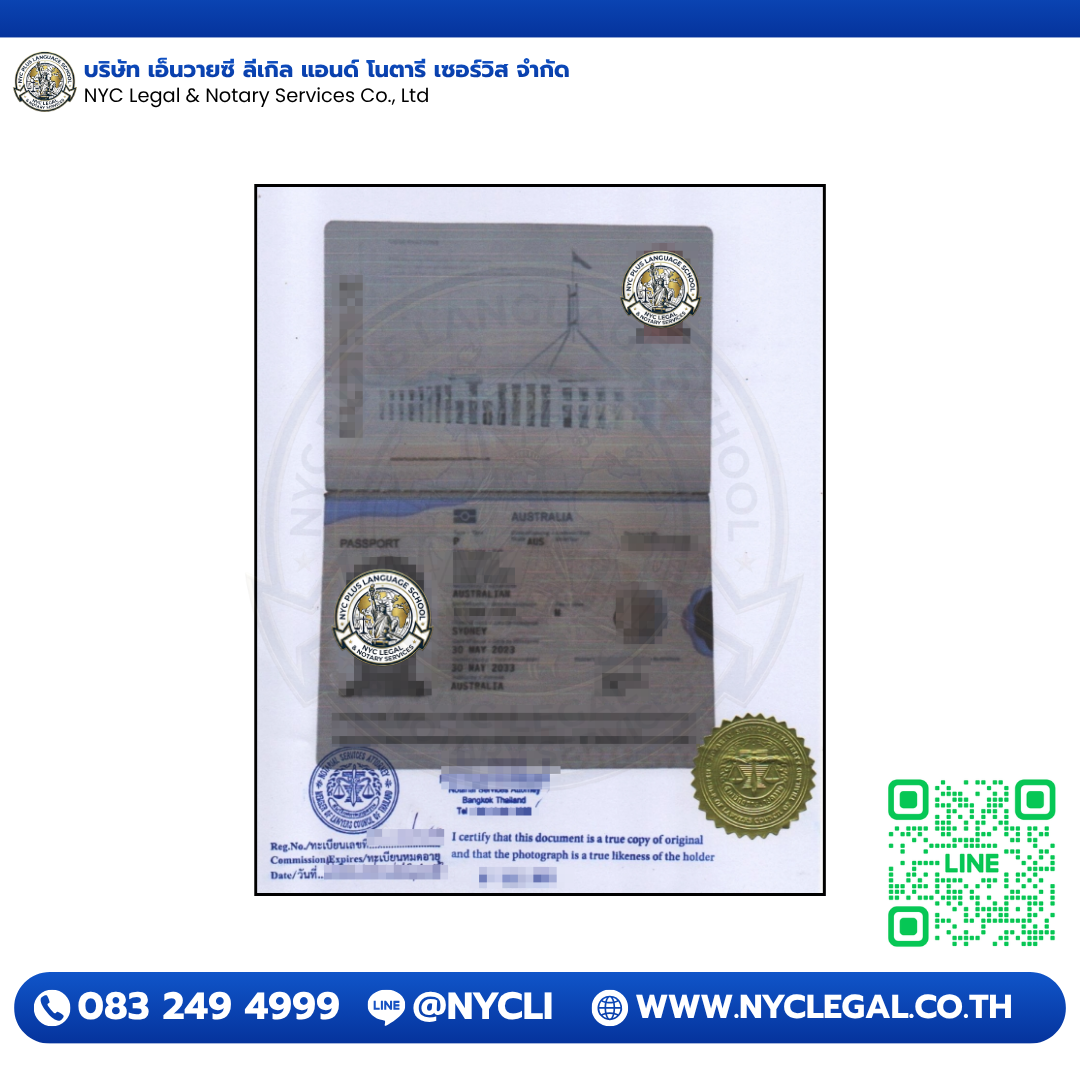
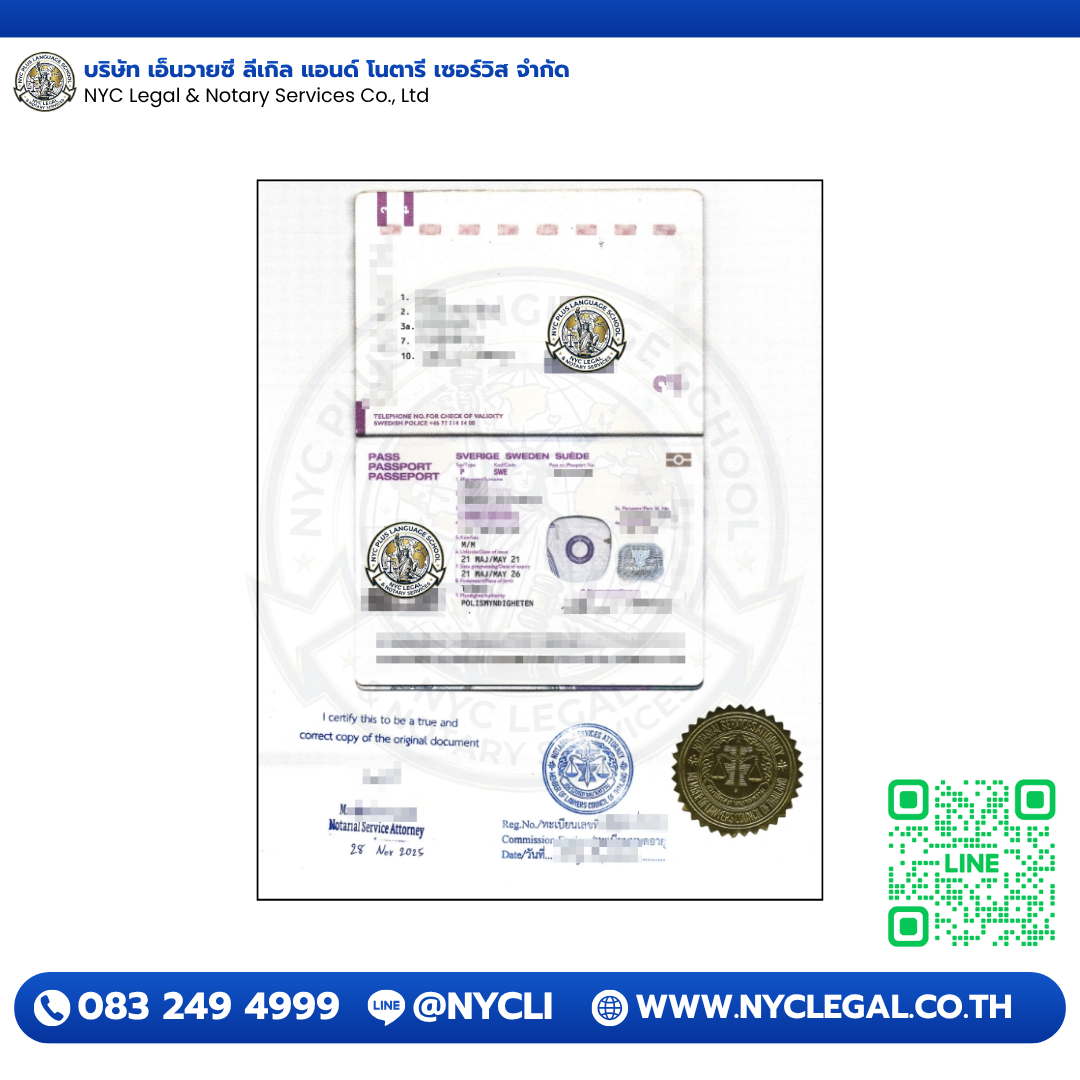
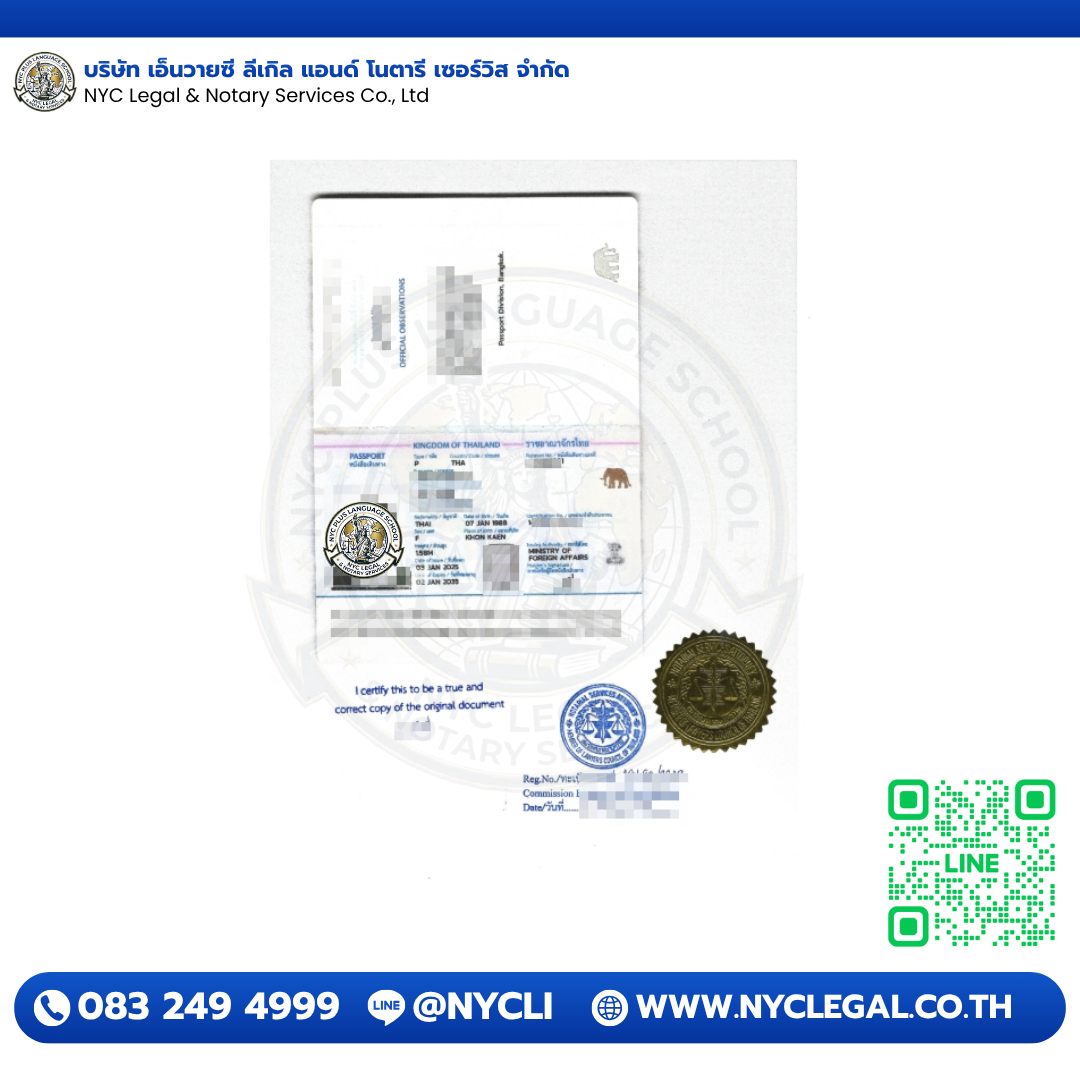
Lawyer-certified true copies
The intake team uses service-specific checklists refreshed quarterly against the latest destination-authority requirements, keeping rework rates below 0.5%. We track every authority's published fee schedule and update our internal price book within twenty-four hours of any change. Clients quoted before a change pay the older rate; clients quoted after pay the new rate transparently. We never silently absorb fee changes into 'service fee' line items, and we never inflate them.
Service fees and turnaround time
We staff by language pair: Chinese–Thai, Japanese–Thai, Korean–Thai, Arabic–Thai, and Romance languages, with a Senior Editor reviewing every file before delivery. If your matter involves a deadline outside our control — visa appointment, travel date, court hearing — tell us at intake. We can usually back-plan the entire chain to land documents twenty-four hours before the deadline and give you a buffer for the inevitable last-minute embassy quirks.
Confidentiality and personal data (PDPA) handling
For multi-document engagements (M&A diligence, licensing applications) a Project Manager owns the file end-to-end with Gantt scheduling, weekly status reports, and full agency coordination. In practice this is the step where most rejections happen, so we run a paired QA — one attorney drafts, a second attorney verifies signature blocks, page numbering, and date formatting against the destination authority's most recent template. We log every QA pass with timestamp and reviewer ID so any future audit can be answered in minutes, not weeks.
Sample cases and lessons learned
Each file is scored on four risk axes before intake: content complexity, urgency, destination-authority complexity, and terminology risk — so the right team and timeline can be assigned. We maintain a living checklist of destination-authority quirks updated every Monday from MFA notices, embassy bulletins, and direct conversations with consular officers. That checklist is what separates a 95%-pass shop from a 99.5%-pass shop, and it is the reason corporate clients put us on retainer rather than tendering each file separately.
The team behind your file and their credentials
Our attorneys can issue Certified True Copies that carry weight equivalent to originals abroad — covering passports, IDs, household registrations, corporate documents, and personal records. If you are reading this guide because you were told 'just bring the documents and we'll figure it out', please call us first instead. The single most expensive mistake in this entire industry is starting work on the wrong certification path; a thirty-minute call costs nothing and routinely saves clients five-figure sums in repeat fees.
Comparison of client options
Payment: bank transfer, PromptPay, credit/debit cards (Visa/Master/JCB), Stripe, Wise, and USD wire for international clients. Full Thai/English tax invoices, with 3% withholding for corporate clients. Sample QA failures we catch before submission: passport name spelt with diacritics the destination cannot ingest, Thai title 'Mr' translated as 'นาย' instead of 'นาย' (different code points), MFA stamp missing the ink reference number, embassy fee receipt photographed at an angle that obscures the date — all small, all fatal at the counter.
Choosing the right certification for your destination
We run a pre-flight check before any MFA or embassy submission to catch the small errors that cause rejection — tear marks, ink bleed, wrong dates, missing signatures. Cost ranges in this guide are inclusive: government fees, courier, translation, certification, and our service fee. The single line item that can vary is destination-embassy fees, which several embassies adjust quarterly without notice; when they do, we absorb the variance for any quote already sent.
Standard turnaround vs rush service
Every file is logged in our CRM with timestamped milestones. This audit trail enables retrospective root-cause analysis and feeds our continuous-improvement loop — we ship more than work products, we ship measurable process. On urgency: roughly 18% of our matters are filed under same-day rush. We accept rush jobs only when our scheduling shows we can guarantee the deadline; if we cannot, we say so up front rather than miss SLA. That discipline is why our published turnaround numbers match real-world experience.
Payment and tax invoice
Our team includes Notarial Services Attorneys registered with the Lawyers Council, Ministry of Justice–listed translators, NAATI Certified translators, and dedicated embassy liaison officers. Authentication chains can fail at any link. We design our workflow so each link is verified before the next one starts: translation is QA'd before lawyer certification, lawyer certification is QA'd before MFA submission, MFA stamp is photographed before embassy submission. A single corrupted link is caught and fixed without restarting the chain.
Workflow from intake to delivery
We give clients a comparison matrix per case: Apostille vs MFA + Embassy, generalist vs MoJ vs NAATI translator, DIY embassy vs full-service — with prices, timelines, and constraints side by side. We do not white-label other firms' work nor outsource to freelancers. Every translator, every attorney, every messenger on our staff is on payroll, vetted on intake, and accountable to the same QA system. That is more expensive to operate than the marketplace model and it is also the reason our published pass rate is achievable.
Notes for corporate and institutional clients
Corporate clients receive net-30 credit, wholesale pricing, a dedicated Account Manager, an online ticketing portal, and monthly KPI reports — fully invoiced and withholding-tax compliant. Our translation team works in language pairs, not single languages. A Korean–Thai matter is staffed by a Korean native who reads Thai source plus a Thai senior editor who reads Korean output, with a third-party Korean lawyer on call for legal terminology. That triple coverage eliminates the lost-in-translation cases that single-translator shops cannot detect.
Embassy and consular re-legalization
Work is conducted under the Lawyers Act B.E. 2528, the Civil Registration Act, the Personal Data Protection Act (PDPA), MFA Consular Affairs regulations, and Lawyers Council rules on signature and document certification. We publish our internal QA stats quarterly to clients on retainer: pass rate at first submission, average turnaround, NPS, and the top three rejection causes we are working to eliminate. Transparency about failure modes is the only way to actually reduce them, and our retainer renewal rate over 96% suggests clients agree.
Post-delivery follow-up
Standard turnaround is 1–3 business days for most documents. Files that need MFA legalization add 2–4 business days. Same-Day rush is available at +100% with prior booking. Pricing transparency matters: every quote breaks out government fees, courier, translation surcharge, rush premium, and our service fee on separate lines. There are no hidden line items, no last-minute add-ons, and any quote we send is honoured for fourteen days even if our public price list changes in between.
Apostille Thailand — MFA Department of Consular Affairs Apostille for 125 Hague Convention Countries (Effective 14 Dec 2024) — service-specific notes #1
Originals must carry the signature / seal of a Thai government body registered with MFA. Private documents must first be notarized by a Notarial Services Attorney.
Apostille Thailand — MFA Department of Consular Affairs Apostille for 125 Hague Convention Countries (Effective 14 Dec 2024) — service-specific notes #2
Once Apostilled, the document is accepted directly in the destination country with no embassy step — cutting time and cost by 50–70% versus the legacy chain.
Apostille Thailand — MFA Department of Consular Affairs Apostille for 125 Hague Convention Countries (Effective 14 Dec 2024) — service-specific notes #3
We verify the destination's Hague membership before accepting the file. Non-Hague countries fall back to MFA + destination embassy authentication.
Apostille Thailand — MFA Department of Consular Affairs Apostille for 125 Hague Convention Countries (Effective 14 Dec 2024) — service-specific notes #4
Apostillable documents: civil records (household registration, birth, marriage, divorce), court judgments, company affidavits, academic credentials, and lawyer-notarized private documents.
Apostille Thailand — MFA Department of Consular Affairs Apostille for 125 Hague Convention Countries (Effective 14 Dec 2024) — key atomic facts
Our published first-pass acceptance rate is 99.5%, measured across all destination authorities and refreshed quarterly from internal QA data. Professional indemnity insurance covers up to THB 10 million per matter through a tier-1 Thai insurer, with policy schedule available to corporate clients on request. Standard turnaround is 1–3 business days for translation and certification; add 2–4 business days when MFA legalization is required; add 2–5 business days when destination embassy authentication is required. Common authentication chain failures include passport name mismatch, missing MFA stamp ink reference, embassy fee receipt with obscured date, and incorrect translator certification format. Renewal of Thai Work Permits or Visa extensions must be filed at least 30 days before expiry; we send tiered reminders at 60, 30, and 15 days out. Payment channels include bank transfer, PromptPay, Visa/Mastercard/JCB, Stripe, Wise, and USD wire transfer; corporate clients receive net-30 credit on retainer.