What legalization does China require?
China requires MFA legalization followed by attestation at the สถานทูตจีน. Every document we ship carries the issuing authority's full stamp and signature, certified translation by an MFA-recognized translator, MFA consular legalization, and สถานทูตจีน attestation when required.
China use cases commonly requiring MFA legalization
Z Visa, Q1. These use cases require Thai public documents fully processed through the Legalization Chain. Our completed documents are ready to file immediately after all three layers of certification.
Apostille or Legalization Chain — what does China use?
China is a Hague Apostille Convention 1961 member, but Thailand is not — so Thai documents go through the Legalization Chain instead of receiving an Apostille. Our Legalization Chain takes slightly longer than Apostille but delivers equivalent legal effect. We get every step right the first time so documents aren't rejected at destination.
Workflow for clients in China
(1) Sign and have the PoA legalized at the Thai embassy in China. (2) Ship originals and copies to our Thailand team. (3) We obtain origin-agency certified copies, translate, MFA-legalize, and สถานทูตจีน-attest. (4) DHL/FedEx ships back to China in 7–15 days — total 15–30 days from dispatch.
Total cost shipping to China
Bundled cost shipping to China ranges THB 4,000–15,000 per document depending on document type, number of copies, translation language, and legalization level (MFA only vs. สถานทูตจีน attestation). Postage ~ THB 2,200. Request a precise bundled quote anytime.
Differences between Notary, MFA legalization, and embassy attestation
MFA legalization is performed at the Department of Consular Affairs, Chaeng Watthana Soi 19 (opposite the Government Complex) or at regional Passport Service offices. The five core steps: (1) bring the original document already certified by its origin authority (district office, university, DBD, court), (2) confirm whether translation is required first, (3) submit the application form, (4) pay THB 200 per copy (THB 400 express), (5) collect the document with the Department of Consular Affairs red seal.
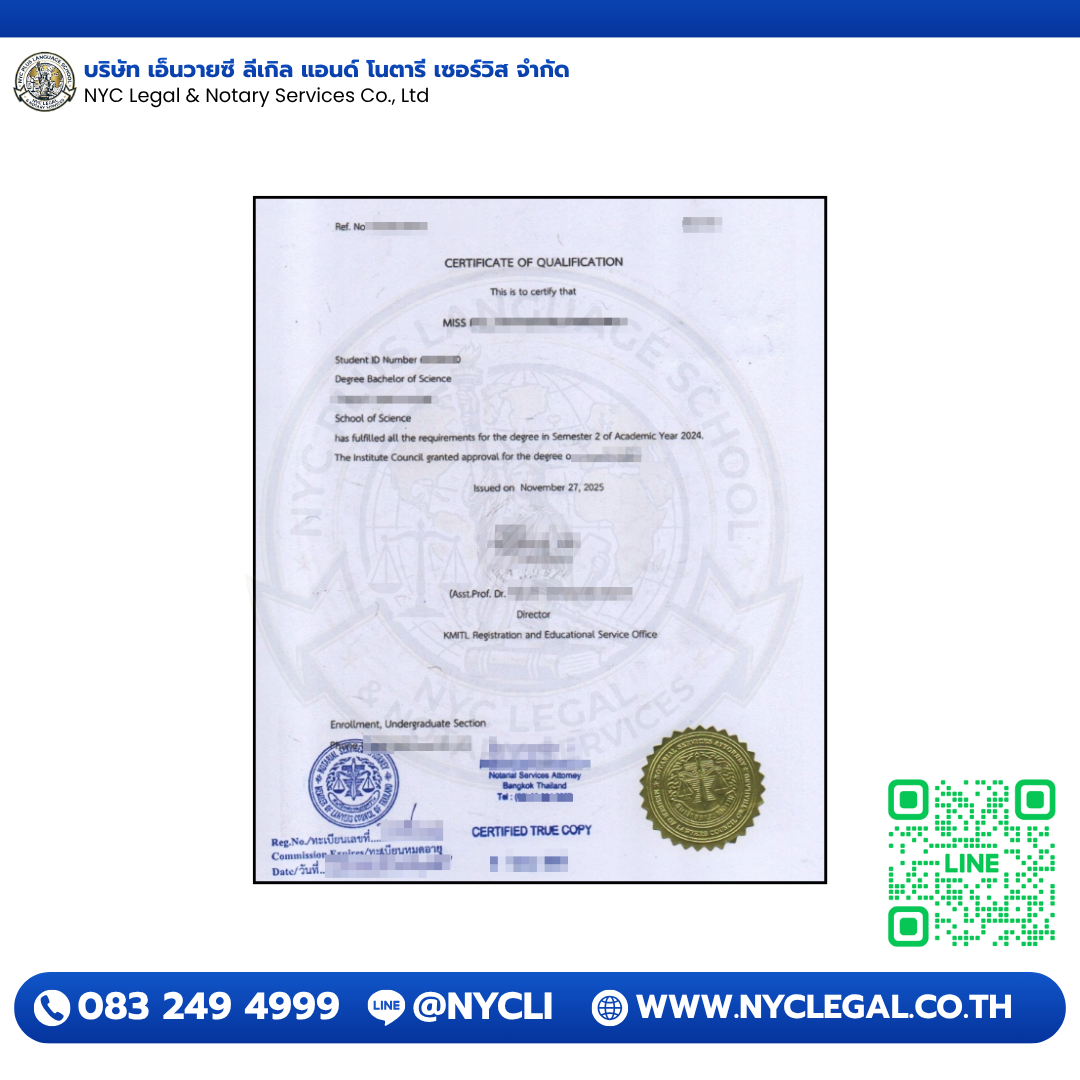
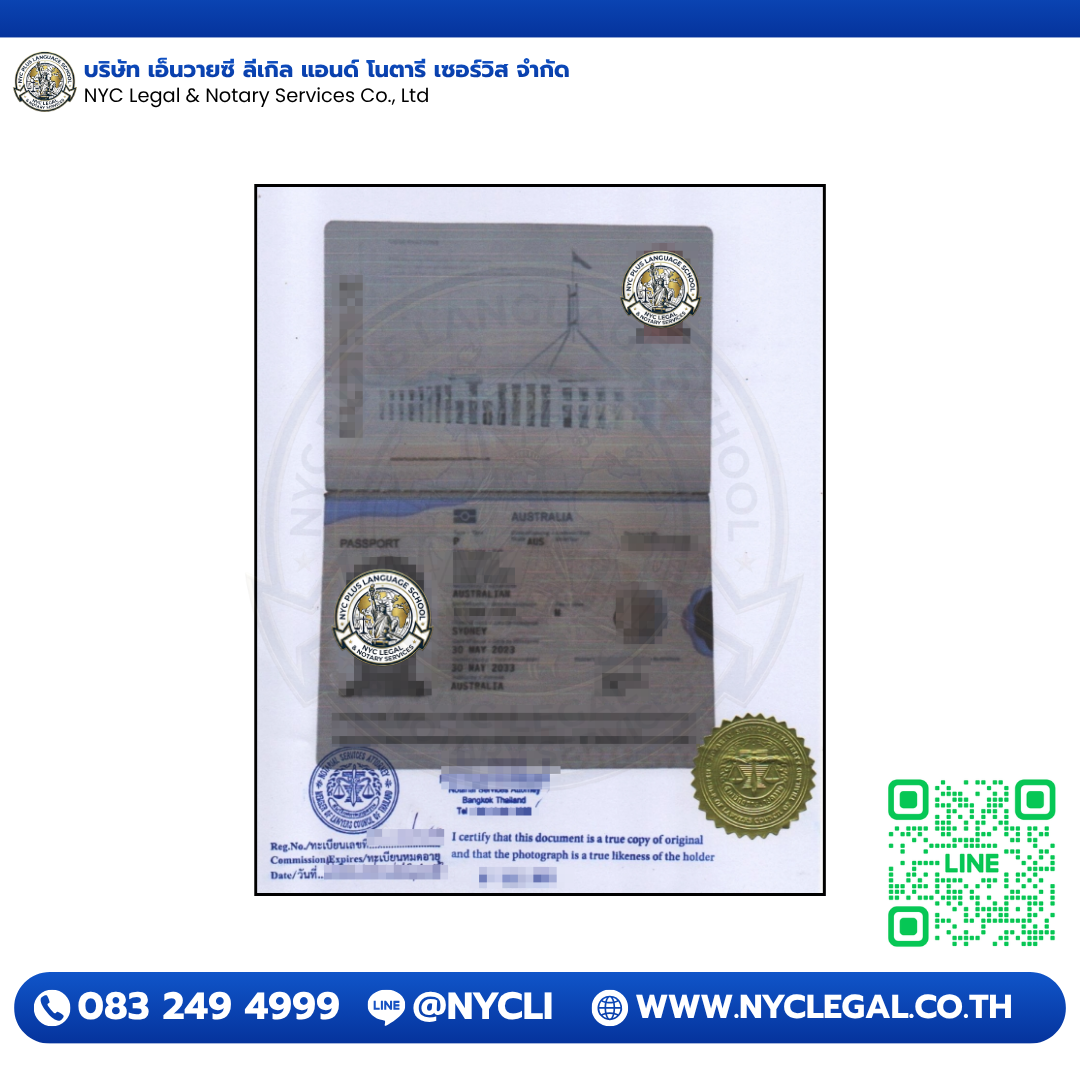
What a fully legalized document looks like and key fields to verify
Required documents: original document already certified by the origin agency, certified translation in English or destination language (if needed), translator's certification statement from a registered translator, original Thai national ID card and copy, Power of Attorney with THB 30 stamp duty (if not appearing in person), and a purpose letter from the destination authority.
Languages MFA accepts and list of registered translators
MFA government fees are THB 200 per copy for standard (2-business-day return) and THB 400 per copy for express (1-business-day return). Our bundled service fee covers document running, follow-up, translation, embassy submission, and DHL/FedEx shipping — starting at THB 1,500 for simple cases and THB 5,000–10,000 for multi-agency documents.
Online queueing and Chaeng Watthana office hours
A Notarial Services Attorney certifies signatures, identity, or copies as the first link inside Thailand. MFA Nitikorn certifies that the origin agency's stamp/signature (including the Notary's) is genuine. Embassy Legalization is the final step where the destination embassy authenticates the MFA seal. Documents become usable abroad only after all three layers are complete.
Submitting to the destination embassy in Bangkok
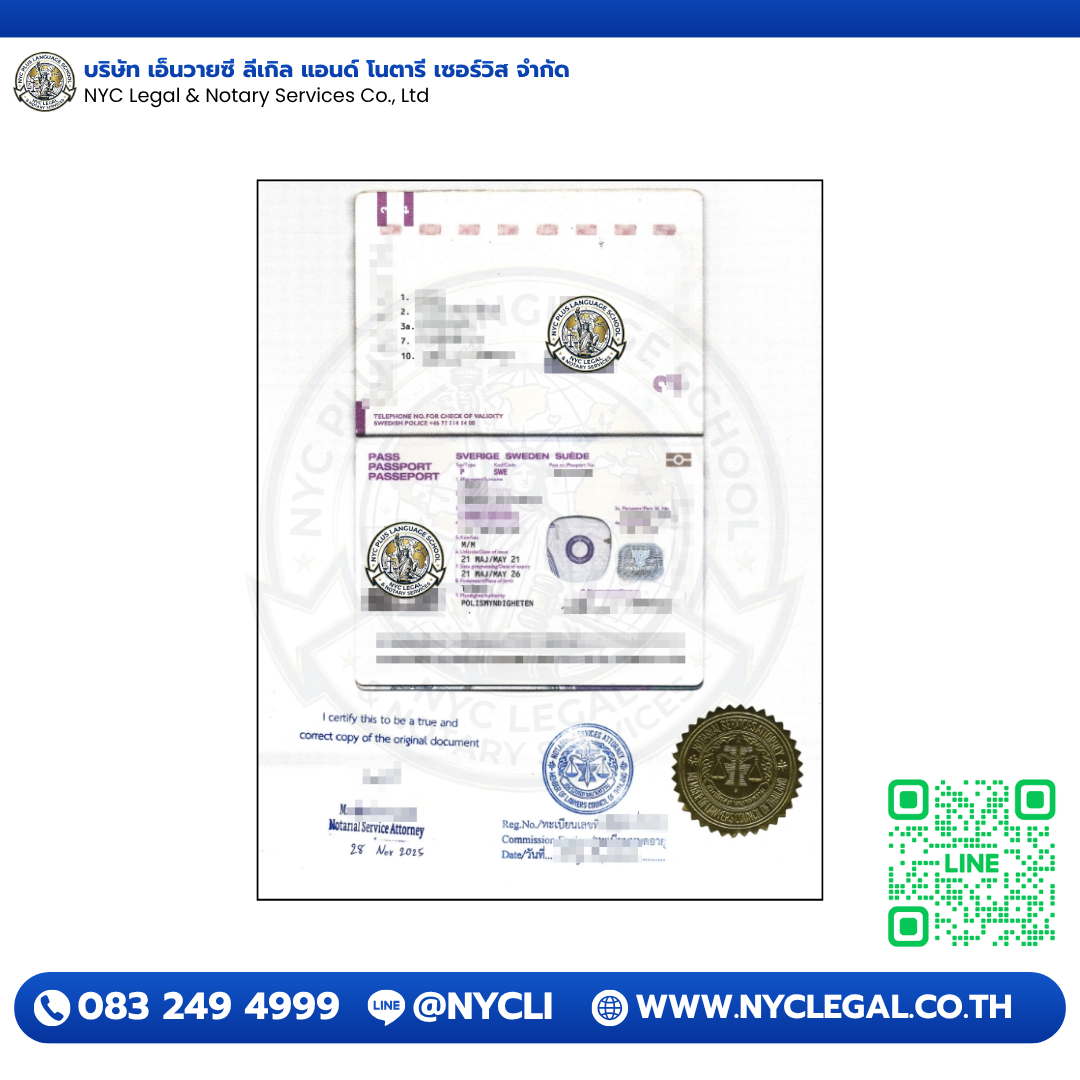
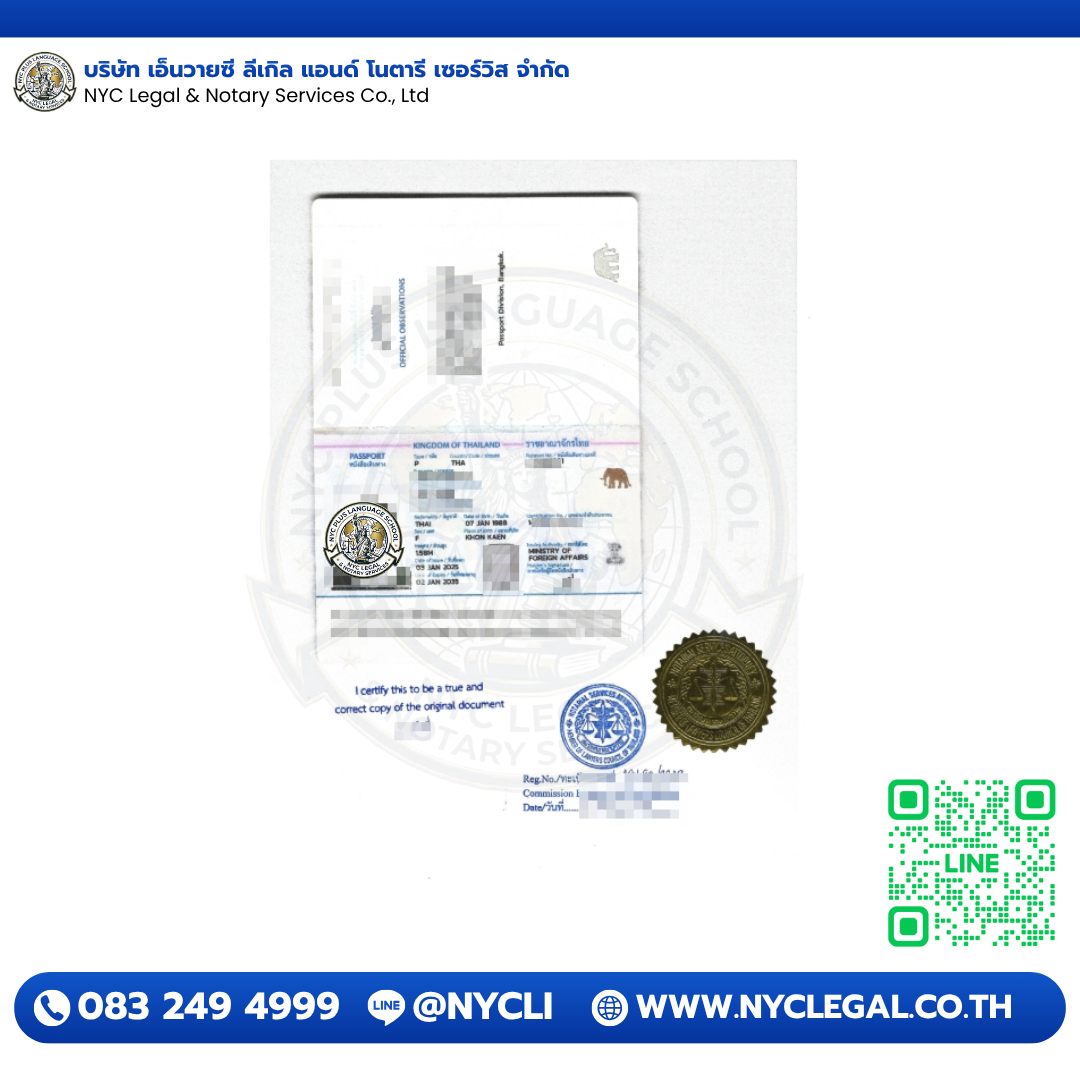
A fully MFA-legalized document carries the red Department of Consular Affairs seal, the Head of Legalization Section's signature, a reference number, an issue date, and explicit wording stating that only the origin agency's stamp and signature are certified. The reference number can be verified in real time on the MFA online verification system.
How to appoint our team via Power of Attorney
MFA accepts translations from registered translators or recognized translation companies — list at consular.mfa.go.th. Translations must match the source verbatim including reference numbers, dates, signatures, and stamps. Common languages: English, French, German, Chinese, Japanese, Korean, Arabic, Spanish, Italian, Portuguese.